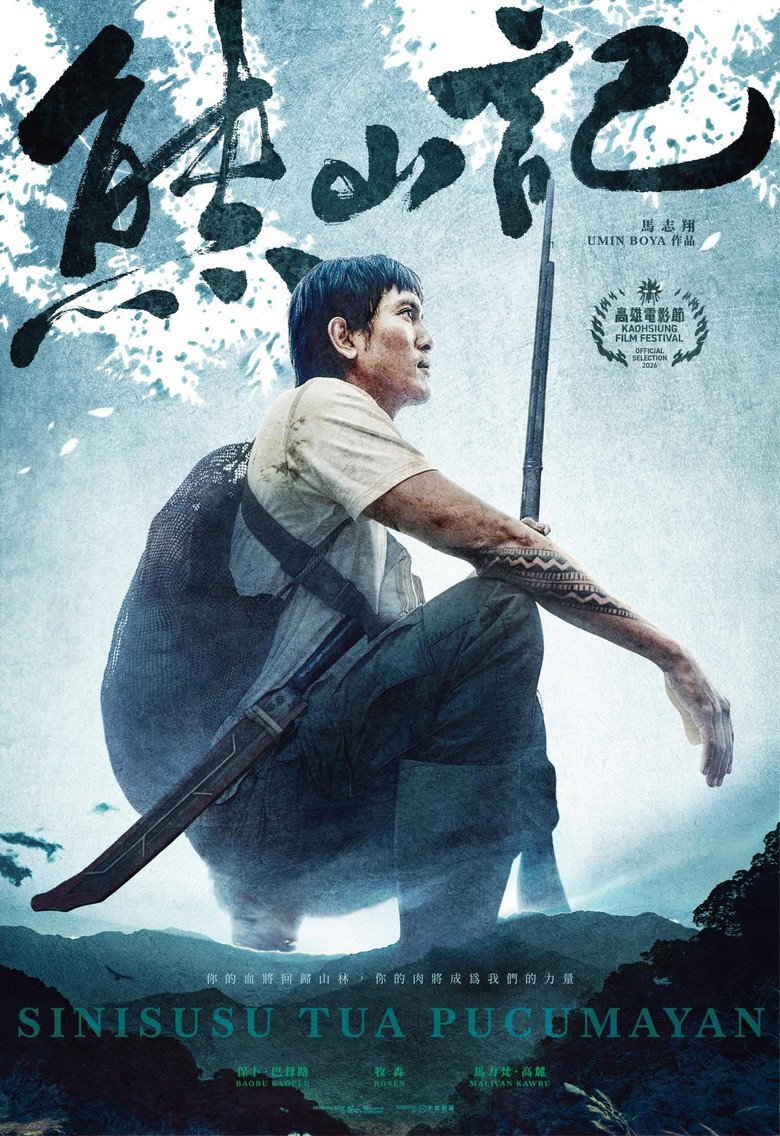
Set in Taiwan’s Dawu Mountain Range during the 1990s Indigenous rights movement, The Last Hunter follows Baru, an army deserter whose illicit hunt leads him into Paiwan ancestral territory, cultural memory and a dangerous encounter with the mythical Black Bear revered by his tribe.
The Last Hunter is a Taiwanese drama set in the mist-covered Dawu Mountain Range during the 1990s Indigenous rights movement. Its central figure, Baru, is a 28-year-old Indigenous man attempting to prove himself through an illicit hunt while facing pressure from both the law and the realities of poverty.
Written and directed by Umin Boya, the film connects Baru’s journey with Paiwan ancestral territory, memories of his late father and the spiritual significance of nature. The story’s conflict grows from a historical taboo and an encounter with a mythical Black Bear revered by Baru’s tribe.
The Last Hunter movie details
| Title | The Last Hunter |
|---|---|
| Original title | 熊山記 SINISUSU TUA PUCUMAYAN |
| Release date | |
| Genres | TV Movie, Drama |
| Director | Umin Boya |
| Writer | Umin Boya |
| Country | Taiwan |
| Languages | Mandarin |
| Status | Released |
Story without spoilers
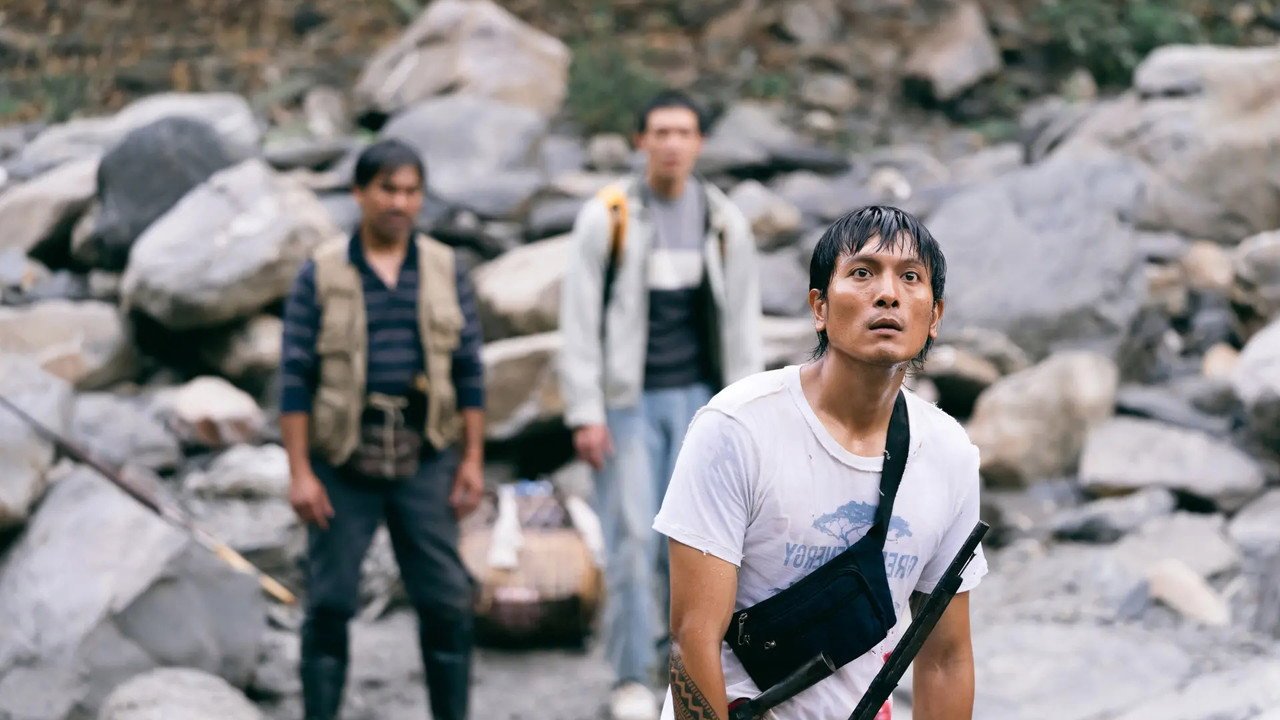
Baru enters the forest to hunt illegally, hoping to prove that he is worthy of his pregnant girlfriend. His plan places him in the path of policeman Sam and poacher Sakinu, who pursue him as he moves farther into the Dawu Mountain Range.
The forest also brings Baru closer to memories of hunting with his late father and to Indigenous cultural traditions connected with the land. As economic circumstances push him toward violating a historical taboo, his expedition takes on spiritual as well as personal importance. The resulting encounter with the revered Black Bear becomes the central turning point of his journey without revealing how the story concludes.
What to expect
The film is presented as a drama with a strong connection to Indigenous identity, ancestral culture and spirituality. Its setting is the lush, misty Dawu Mountain Range, while its period context places the story amid Taiwan’s 1990s Indigenous rights movement.
Viewers can expect a character-led account shaped by an illicit hunt, pursuit by a policeman and a poacher, family memory, economic pressure and a mythical presence. The premise also places questions of belonging, cultural inheritance and the relationship between people and nature at the heart of the story.
Cast and creative team
The Last Hunter is written and directed by Umin Boya. The cast includes Baobu Badulu, Rosen Tsai, Malivan Kawru and Du Yan. The supplied cast information does not specify their character names.
- Baobu Badulu
- Rosen Tsai
- Malivan Kawru
- Du Yan
Release and production context
The Last Hunter is a Taiwan production with Mandarin listed as its spoken language. It is classified as a TV Movie and Drama, and has a listed release date of October 11, 2026. No runtime or production company is provided in the supplied details.
The Last Hunter official trailer
Watch the official trailer on YouTube
Movies Dock view
With its focus on Paiwan ancestral territory, the 1990s Indigenous rights movement and a hunter confronting both material hardship and spiritual tradition, The Last Hunter frames its central conflict on a personal and cultural scale. Its premise combines grounded pursuit with mythic elements while keeping Baru’s choices at the center.
Frequently asked questions
What is The Last Hunter about?
It follows Baru, a 28-year-old Indigenous man whose illicit hunt leads to a pursuit through the Dawu Mountain Range and an encounter with a mythical Black Bear revered by his tribe.
Who wrote and directed The Last Hunter?
Umin Boya wrote and directed the film.
Where is The Last Hunter set?
The story is set in Taiwan’s Dawu Mountain Range and Paiwan ancestral territory during the 1990s Indigenous rights movement.
Who stars in The Last Hunter?
The cast includes Baobu Badulu, Rosen Tsai, Malivan Kawru and Du Yan.
What language is spoken in The Last Hunter?
Mandarin is listed as the film’s spoken language.
Film data:
TMDB
Related posts:
 Misfit Mentor (2026): Cast, Story and Release Details
 DAKAICHI – I'm being harassed by the sexiest man of the year – the Movie: Spain Arc (2021) | Movies Dock
 Night Swim (2024) | Movie | Movies Dock
 Ultimo – Tutto. Live a Tor Vergata (2026): Cast, Story and
 Tiger Stripes (2023) | Movie | Movies Dock
 A Mother's Secret (2026): Cast, Story and Release Details
 Sound of Hope: The Story of Possum Trot (2024) | Movie | Movies Dock
 Antar Nada (2026): Cast, Story and Release Details
 The Neighbor in the Window (2020) | Movie | Movies Dock
 All I Want is You 2 (2023) | Movie | Movies Dock
 Jack Wrather: A Legacy of Film and Friendship (2022) | Movie | Movies Dock
 Champagne ! (2022) | Movie | Movies Dock


