
She Who Remains follows 16-year-old Békia, who adopts the identity of a sworn virgin in the Albanian mountains to avoid a forced marriage. Based on Rene Karabash’s award-winning novel, the Bulgarian-language drama examines the dangerous consequences of resistance within a deeply patriarchal tradition.
She Who Remains is a 2026 drama directed by Kostadin Bonev and based on Rene Karabash’s award-winning novel. The story follows Békia, a 16-year-old girl living in the Albanian mountains, as she seeks a way out of a forced marriage.
Her decision to become a “sworn virgin” places her outside the role expected of her, but it also sets off violent consequences. With its focus on patriarchal traditions and personal survival, the film centers a difficult social conflict rather than a conventional coming-of-age story.
She Who Remains movie details
| Title | She Who Remains |
|---|---|
| Original title | Остайница |
| Release date | |
| Runtime | 1h 56m |
| Genres | Drama |
| Director | Kostadin Bonev |
| Writers | Kostadin Bonev, Rene Karabash |
| Country | Bulgaria, Albania, Italy |
| Languages | Bulgarian |
| Status | Released |
Story without spoilers
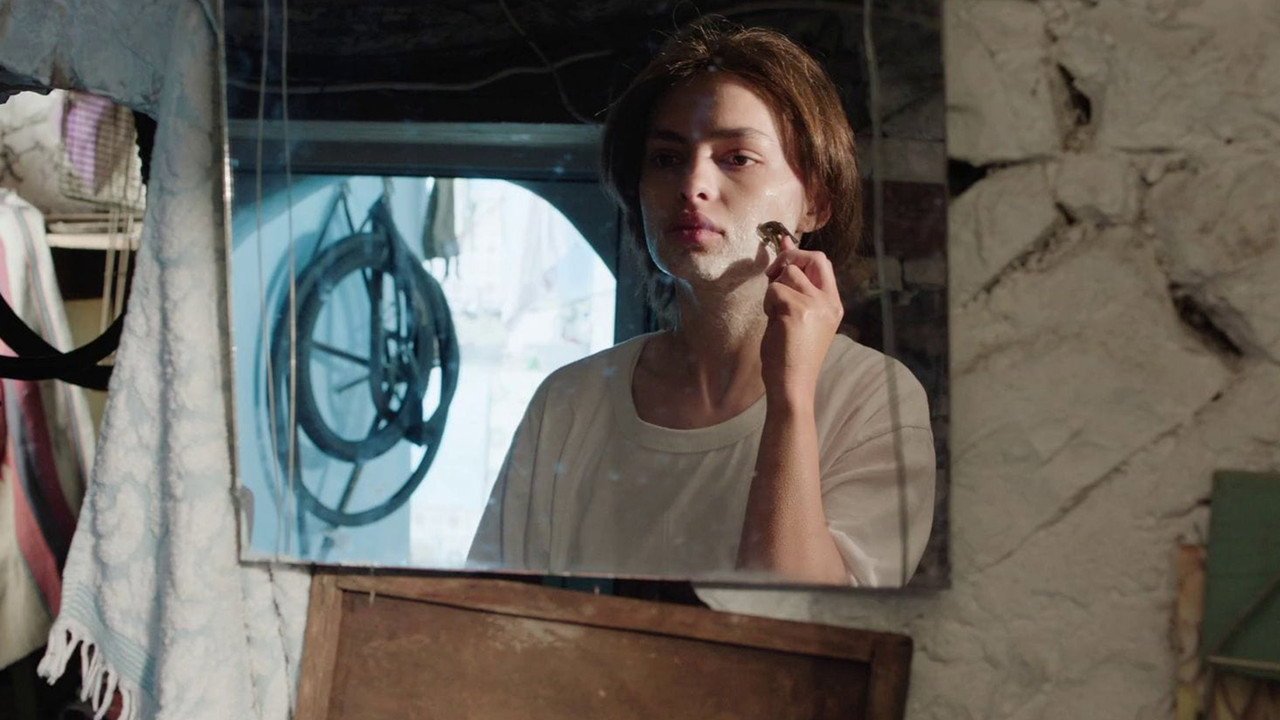
Békia faces the prospect of a forced marriage in a conservative mountain community. To escape that fate, she takes on the status of a “sworn virgin,” a choice that changes how she is allowed to live and how others see her.
The decision does not resolve the pressures surrounding her. Instead, it triggers a chain of violence and places Békia at the center of a conflict shaped by rigid social expectations. The film’s premise examines how tradition, gender and individual freedom collide, while keeping the consequences of Békia’s actions at the heart of the story.
What to expect
She Who Remains is presented as a serious drama built around forced marriage, patriarchal traditions and the social consequences of defying them. The premise suggests a tense, conflict-driven narrative centered on a young protagonist making an extreme choice under pressure.
The film is also rooted in a specific cultural setting: the Albanian mountains. Its 1-hour-56-minute runtime gives the story room to follow Békia’s situation and the violent chain reaction that follows, while the adaptation of Rene Karabash’s novel provides its literary foundation.
Cast and creative team
Kostadin Bonev directs She Who Remains and co-wrote the screenplay with Rene Karabash. Altea Lazaj plays Békia, with Deniza Palova as Dana, Aliaj Urim as Murash and Edinjo Jahjanko as Sale.
The cast also includes Mirela Naska as the mother, Valeria Georgieva as Young Dana, Denardo Neziri as Kuka, Nikole Nikaj as Young Békia, Snezhina Petrova as Petrova and David Paze as Young Sale.
- Altea Lazaj as Bekia
- Deniza Palova as Dana
- Aliaj Urim as Murash
- Edinjo Jahjanko as Sale
- Mirela Naska as The mother
- Valeria Georgieva as Young Dana
- Denardo Neziri as Kuka
- Nikole Nikaj as Young Bekia
- Snezhina Petrova as Petrova
- David Paze as Young Sale
Release and production context
She Who Remains is listed as a 2026 release, with a release date of September 19, 2026. The film is marked as released and has a runtime of 1 hour and 56 minutes. It is a drama produced across Bulgaria, Albania and Italy, and its spoken language is Bulgarian.
Movies Dock view
She Who Remains places a young woman’s attempt to avoid forced marriage within a wider examination of patriarchal tradition. Based on Rene Karabash’s novel and led by Altea Lazaj as Békia, it offers a focused dramatic premise shaped by cultural pressure, identity and escalating consequences.
Frequently asked questions
What is She Who Remains about?
It follows 16-year-old Békia, who becomes a “sworn virgin” in the Albanian mountains to escape a forced marriage, setting off violent consequences.
Who directed She Who Remains?
Kostadin Bonev directed the film.
Is She Who Remains based on a book?
Yes. It is based on the award-winning novel by Rene Karabash, who also co-wrote the film with Kostadin Bonev.
Who plays Békia?
Altea Lazaj plays Békia.
What genre is She Who Remains?
She Who Remains is a drama.
Related posts:
 The Neighbor in the Window (2020) | Movie | Movies Dock
 Antar Nada (2026): Cast, Story and Release Details
 Dead Body (2021) | Movie | Movies Dock
 DAKAICHI – I'm being harassed by the sexiest man of the year – the Movie: Spain Arc (2021) | Movies Dock
 Sound of Hope: The Story of Possum Trot (2024) | Movie | Movies Dock
 Jack Wrather: A Legacy of Film and Friendship (2022) | Movie | Movies Dock
 Tiger Stripes (2023) | Movie | Movies Dock
 All I Want is You 2 (2023) | Movie | Movies Dock
 Night Swim (2024) | Movie | Movies Dock
 A Mother's Secret (2026): Cast, Story and Release Details
 Champagne ! (2022) | Movie | Movies Dock
 Mob Land (2023) | Movie | Movies Dock