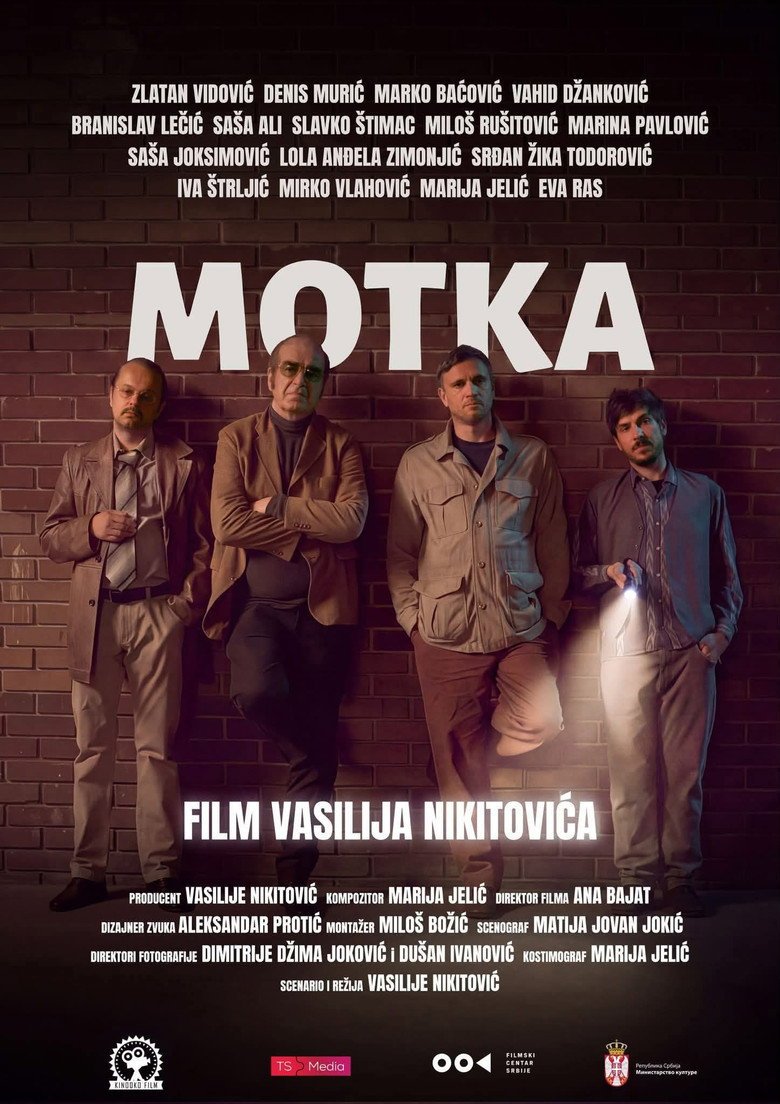
Set in Belgrade’s Dorćol district, Motka follows a group formed around an improvised café as they create their own anti-crime squad. What begins as a response to public humiliation and perceived injustice grows increasingly complicated when their actions cross legal and personal boundaries.
Motka is a 2026 Serbian drama written and directed by Vasilije Nikitović. The film is set around “Radi Motka,” an improvised café in Dorćol that becomes a meeting place for locals with very different backgrounds and personalities.
Their informal attempts to defend one of their own eventually develop into SAČ, or the Serbian Anti-Thief Squad. As the group takes on increasingly serious missions, its idea of justice becomes harder to separate from lawlessness.
Motka movie details
| Title | Motka |
|---|---|
| Release date | |
| Genres | Drama |
| Director | Vasilije Nikitović |
| Writer | Vasilije Nikitović |
| Country | Serbia |
| Languages | Serbian |
| Status | Released |
Story without spoilers
The story centers on Srboljub Dudić Srba, the resourceful operator of “Radi Motka,” and the varied group that gathers at his café. After Sloba becomes the focus of a media campaign following an unsuccessful eviction, the group stages an improvised trial in response.
That act leads to the creation of SAČ. At first encouraged by what they see as success, the members expand their activities, including an effort to find a dog poisoner. Their actions gradually test the group’s unity and force its members to confront the consequences of taking justice into their own hands. “Radi Motka” remains at the center of their shared struggle, even as personal tensions emerge.
What to expect
Motka is presented as a character-driven drama about a locally organized group trying to respond to perceived injustice outside official systems. Its premise moves from a neighborhood café and an improvised trial toward more consequential acts, creating a story about collective action, blurred boundaries and the pressures that can fracture a group.
The film’s Serbian setting and its focus on Dorćol give the story a specific social and community context. Viewers can expect an ensemble narrative rather than a single-protagonist account, with the café serving as the central location and symbol of the group’s efforts.
Cast and creative team
Vasilije Nikitović writes and directs Motka. The cast includes Zlatan Vidović, Denis Murić, Vahid Džanković, Marko Baćović, Branislav Lečić, Saša Ali, Slavko Štimac, Miloš Rustinović, Marina Pavlović and Saša Joksimović. Character assignments are not specified in the supplied information.
- Zlatan Vidović
- Denis Murić
- Vahid Džanković
- Marko Baćović
- Branislav Lečić
- Saša Ali
- Slavko Štimac
- Miloš Rustinović
- Marina Pavlović
- Saša Joksimović
Release and production context
Motka is listed as a Serbian production in the drama genre, with Serbian as its spoken language. Its release date is August 30, 2026, and its status is listed as Released. The production companies are Kinooko Film and Telekom Srbija. No runtime is provided.
Production companies: Kinooko Film, Telekom Srbija
Movies Dock view
Motka uses an improvised café, a neighborhood group and a homemade anti-crime squad to examine how communal solidarity can become complicated when formal justice is viewed as inadequate. Its premise keeps the focus on the people and conflicts surrounding “Radi Motka,” without reducing their actions to a simple division between right and wrong.
Frequently asked questions
What is Motka about?
Motka follows a group of locals who gather at the “Radi Motka” café in Dorćol and form SAČ, the Serbian Anti-Thief Squad, after one of their own becomes the target of a media campaign. Their pursuit of justice eventually blurs into lawlessness.
Who directed Motka?
Motka was written and directed by Vasilije Nikitović.
When was Motka released?
Motka is listed with a release date of August 30, 2026.
What language is spoken in Motka?
The film’s spoken language is Serbian.
Who stars in Motka?
The cast includes Zlatan Vidović, Denis Murić, Vahid Džanković, Marko Baćović, Branislav Lečić, Saša Ali, Slavko Štimac, Miloš Rustinović, Marina Pavlović and Saša Joksimović.
Related posts:
 Trapped in the Spotlight (2025) | Movie | Movies Dock
 Carjackers (2025) | Movie | Movies Dock
 Shadow Master (2022) | Movie | Movies Dock
 Wintertide (2023) | Movie | Movies Dock
 After This Death (2025) | Movie | Movies Dock
 Supercell (2023) | Movie | Movies Dock
 Romin (2026): Cast, Story and Release Details
 Let's Get Lost (2023) | Movie | Movies Dock
 Carter (2022) | Movie | Movies Dock
 Junction Row (2026): Cast, Story and Release Details
 The Wikipedia Promise (2021) | Movie | Movies Dock
 Carmina Burana – Carl Orff in Venedig (2022) | Movie | Movies Dock