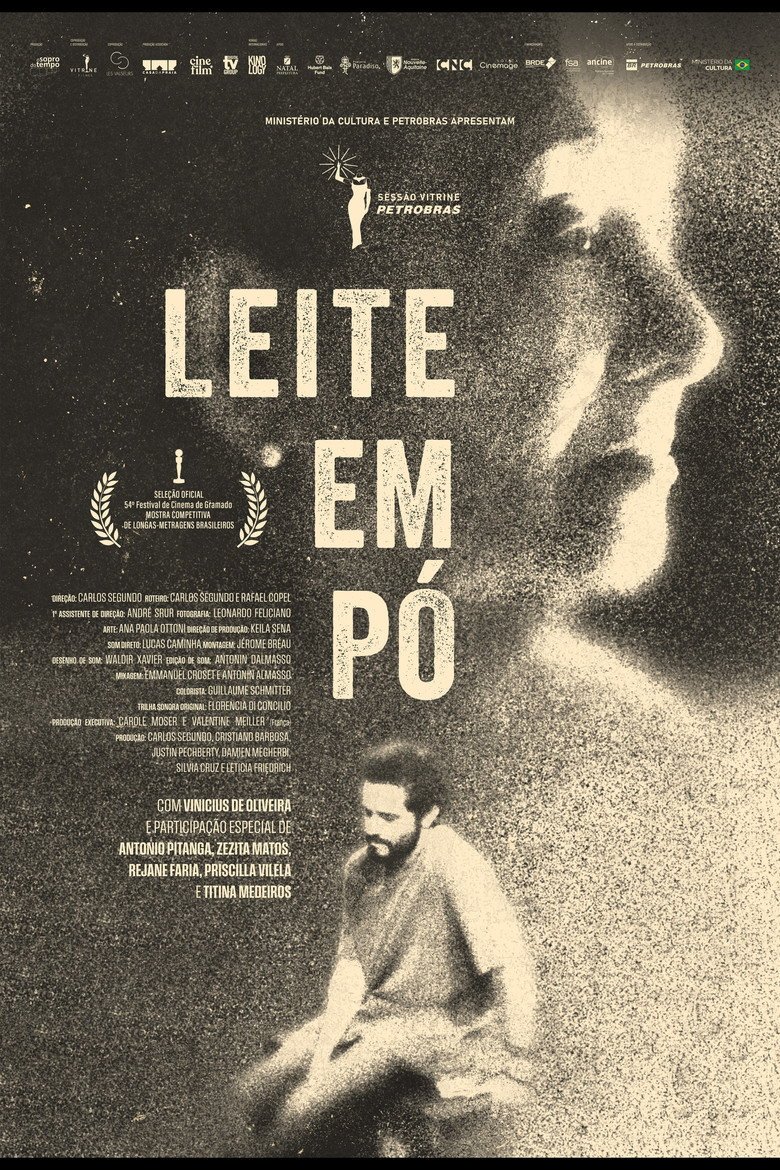
Leite em Pó follows a rock-obsessed musician whose life unravels after a devastating family loss. A new job sends him through the city, where encounters with strangers and troubling memories push him toward an uncertain confrontation with reality.
Leite em Pó is a 2026 drama from Brazil and France, written and directed by Carlos Segundo, with Rafael Copel also credited as a writer. The film centers on a musician whose personal and financial circumstances deteriorate after a profound family tragedy.
Its story moves between urban encounters and difficult memories as the protagonist tries to find some connection to ordinary life. The film is in Portuguese and features Vinícius de Oliveira, Antônio Pitanga, Zezita Matos, Rejane Faria, Titina Medeiros and Priscilla Vilela.
Leite em Pó movie details
| Title | Leite em Pó |
|---|---|
| Release date | |
| Genres | Drama |
| Director | Carlos Segundo |
| Writers | Carlos Segundo, Rafael Copel |
| Country | Brazil, France |
| Languages | Portuguese |
| Status | Released |
Story without spoilers
The central character is a musician with limited talent and an intense attachment to rock music. After suffering a devastating loss within his family, he is left alone and without money, forcing him to accept a new job that takes him around the city.
As he encounters a broad range of people, their perspectives begin to challenge the way he sees the world. Alongside these new urban relationships, disturbing memories continue to weigh on him. His increasingly erratic path becomes an attempt to face the unresolved experiences haunting him and regain contact with reality.

What to expect
Leite em Pó is presented as a character-focused drama about grief, isolation, poverty and psychological disorientation. Its premise combines a struggling musician’s personal crisis with a series of encounters across the city, allowing the story to explore how unfamiliar people can unsettle established beliefs.
The supplied synopsis points to an introspective and uneasy narrative rather than a conventional music story. Viewers can expect a journey shaped by memory, social encounters and the protagonist’s effort to reconnect with everyday reality. Specific plot developments and the ending are not disclosed here.
Cast and creative team
Carlos Segundo directs Leite em Pó and co-wrote the film with Rafael Copel. The cast includes Vinícius de Oliveira, Antônio Pitanga, Zezita Matos, Rejane Faria, Titina Medeiros and Priscilla Vilela. No character names are supplied for the cast.
- Vinícius de Oliveira
- Antônio Pitanga
- Zezita Matos
- Rejane Faria
- Titina Medeiros
- Priscilla Vilela
Release and production context
Leite em Pó is listed as a 2026 release, with a release date of August 18, 2026. It is classified as a drama and is produced across Brazil and France. The spoken language is Portuguese. The listed production companies are O Sopro do Tempo, Les Valseurs and Vitrine Filmes. A runtime is not provided.
Production companies: O Sopro do Tempo, Les Valseurs, Vitrine Filmes
Movies Dock view
With its focus on a musician coping with loss, financial hardship and an unstable relationship with reality, Leite em Pó offers a compact premise for a serious Portuguese-language drama. Its Brazilian and French production context and city-based story place the character’s inner crisis alongside a wider social world, while the available details leave the film’s final direction open.
Frequently asked questions
What is Leite em Pó about?
It follows a rock-obsessed musician whose life collapses after a devastating family loss. A new job takes him through the city, where encounters with other people challenge his worldview as he confronts troubling memories.
Who directed Leite em Pó?
Leite em Pó was directed by Carlos Segundo.
Who wrote Leite em Pó?
The film was written by Carlos Segundo and Rafael Copel.
Who stars in Leite em Pó?
The listed cast includes Vinícius de Oliveira, Antônio Pitanga, Zezita Matos, Rejane Faria, Titina Medeiros and Priscilla Vilela.
When was Leite em Pó released?
The listed release date is August 18, 2026.
Related posts:
 Supercell (2023) | Movie | Movies Dock
 Let's Get Lost (2023) | Movie | Movies Dock
 The Wikipedia Promise (2021) | Movie | Movies Dock
 After This Death (2025) | Movie | Movies Dock
 Mission Ulja Funk (2023) | Movie | Movies Dock
 Xeno (2025) | Movie | Movies Dock
 Trapped in the Spotlight (2025) | Movie | Movies Dock
 Carjackers (2025) | Movie | Movies Dock
 Wintertide (2023) | Movie | Movies Dock
 Shadow Master (2022) | Movie | Movies Dock
 Carmina Burana – Carl Orff in Venedig (2022) | Movie | Movies Dock
 Carter (2022) | Movie | Movies Dock